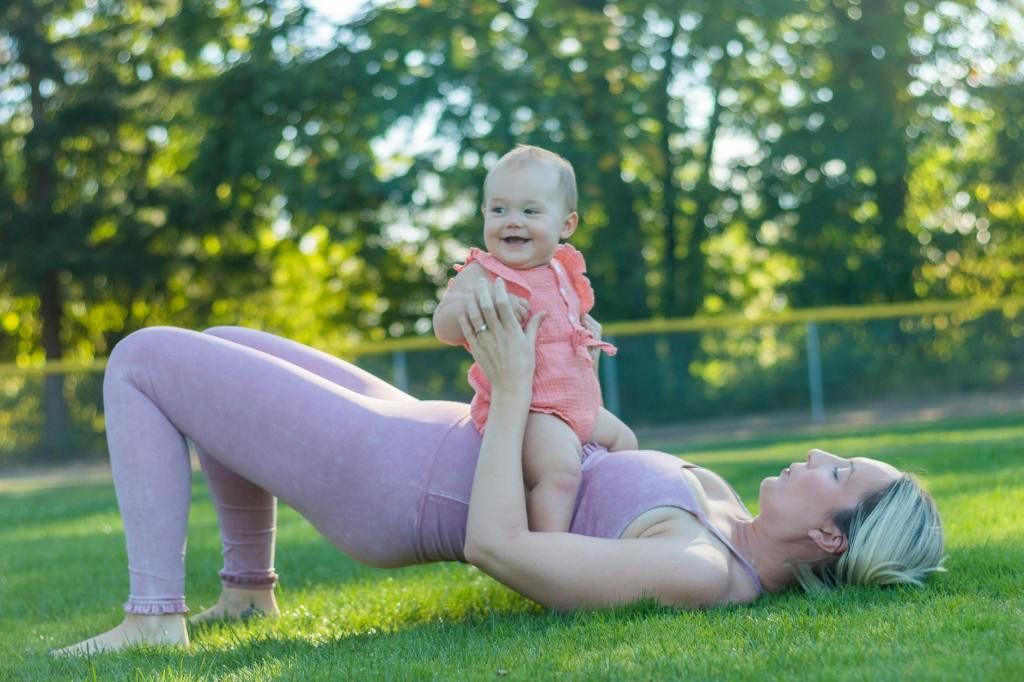
Does anyone else turn the nightly routine of rocking your baby to sleep into a workout? I was just thinking about this last night, as I was doing exactly that, and got to wondering how popular of an idea it was. Surely I couldn’t be the only one who thinks rocking your baby to sleep is a legitimate exercise routine. And if I am, then this message needs to be shared, because it is a game-changer.
My Nighttime Workout Routine
My 1-year-old son is currently going through a sleep regression, so I’ve had plenty of opportunities to test out my new “workout routine.” Yes, it sounds silly, but I purposefully call it that for the mindset shift it helps create (more on that later).
Here’s what it looks like:
- Warm Up: After picking up my screaming son, I start my workout with some partial or mini squats as I bounce him up and down, knowing how much he loves the motion of it. Without fail, it transforms his crying into cooing/babbling—most likely as a result of the exercise ball I bounced on every day while pregnant with him.
- Legs: After 30 seconds or so of these partial squats, I switch to lateral squats (shifting your weight from one foot to the other and swatting down), effectively rocking him side-to-side and giving my legs a different set of muscles to strain. At this point, my son has calmed down and usually continues with his vocalizations, either letting me know that he likes being held, or protesting his inevitable return to the crib. Or both—probably both.
- Dance Break: Once my legs are really feeling the burn, I dance with him around the room. Rocking him back-and-forth, this way and that, slowly twirling and bouncing from one foot to the other. Sometimes I’ll pause to add in some calf-raises until my muscles tire, then begin the trek around the room again. Our dance together helps to shake out the burn in my legs and gets me ready for another round of squats or side lunges, which I always need since he takes a long time to get drowsy after his bouts of crying.
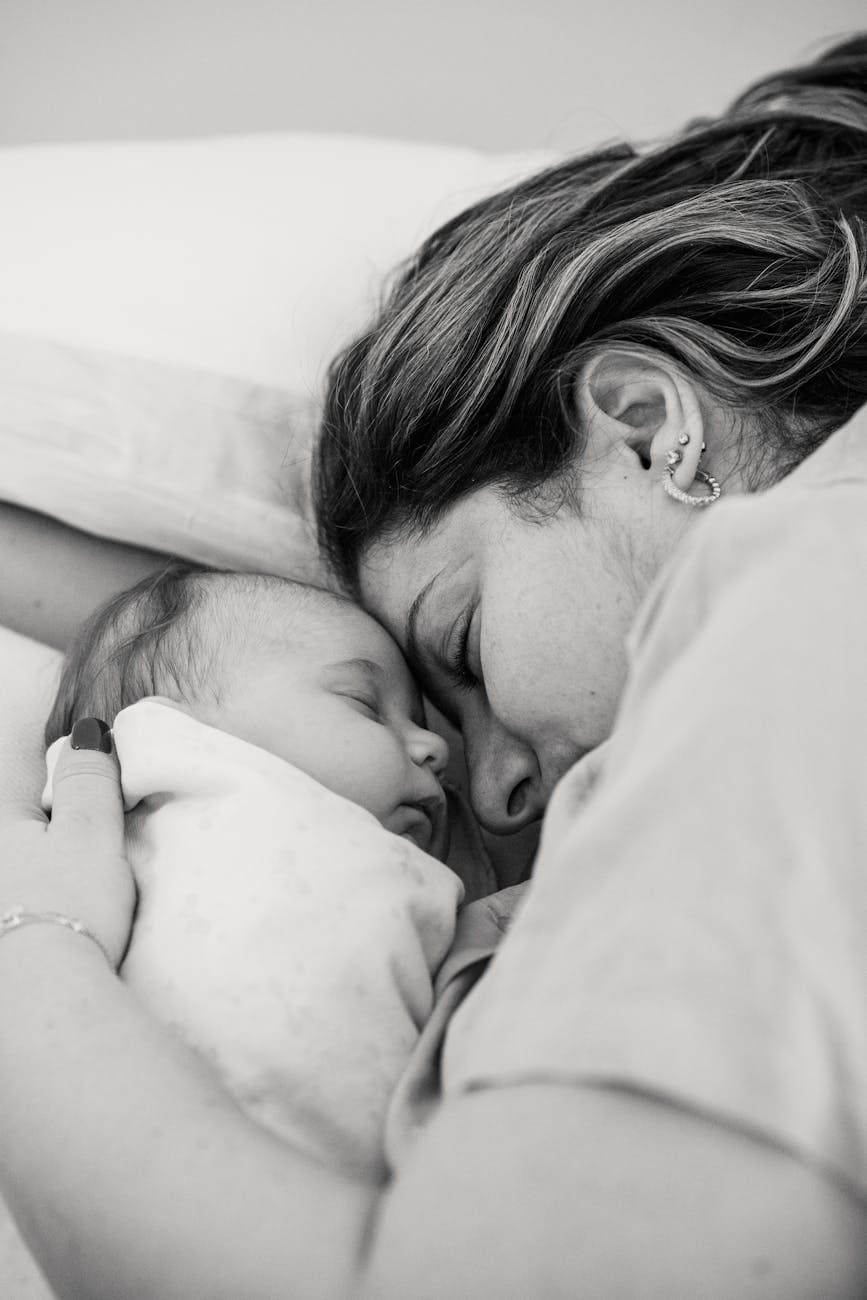
- Arm + Core Engagement: I can usually tell when he’s settling down, and that’s when I’ll lay him in the crook of my arms and gently sway him. When this happens, I have to really focus my attention on only using my biceps and engaging my core to remain upright—most of the time when my muscles fatigue as I’m holding him, I’ll use my hips to support his weight which strains the back muscles and causes improper alignment for the hips. I believe this, among other things, is one of the main reasons I’m struggling with healing my diastasis recti, but that’s a topic for another blog post. I do my best to hold him in that position as long as I am able to (or for as long as he’ll let me) before switching back to legs.
I repeat the whole process over again until he is either almost asleep, or completely asleep. I know, I know…not what you’re supposed to do when you’re trying to teach him to fall asleep on his own. But hey, I’m not perfect. And I love watching his sweet little face as he drifts off to sleep in my arms. Got to soak in those moments while we have them, right?
Turning Everyday Chores into Mini Workouts
Some days, I get nearly half of my entire day’s worth of steps just in those nighttime or naptime “workouts” alone. I believe the shift in mindset – from merely rocking your baby to sleep, to focusing on engaging your muscles with good posture – really elevated the entire experience for me. I was finally able to squeeze in a workout on days when I couldn’t go to the gym, or was too busy to dedicate time to a full workout. I felt like I was getting stronger with every rep I completed.
Eventually, after about a week of doing this consistently, it became second nature. I started “working out” every time I put my son to sleep.
Let’s face it: we’re all looking for ways to get stronger, to be healthier and move more in our day. This is something you can start doing right away to start building in more healthy habits into your life. Just by tweaking your mindset for an activity you’re already doing, you could be working out every single day.
The best part is, these mini-workouts aren’t limited to just those with little ones. Anyone can shift their mindset in this way.
Here are some examples:
- Unloading the dishwasher? Try squatting or deadlifts instead of bending over.
- Tidying up toys or clothes? Lunge as you grab items from the floor.
- Waiting for the microwave? Do a few calf raises or gentle stretches.
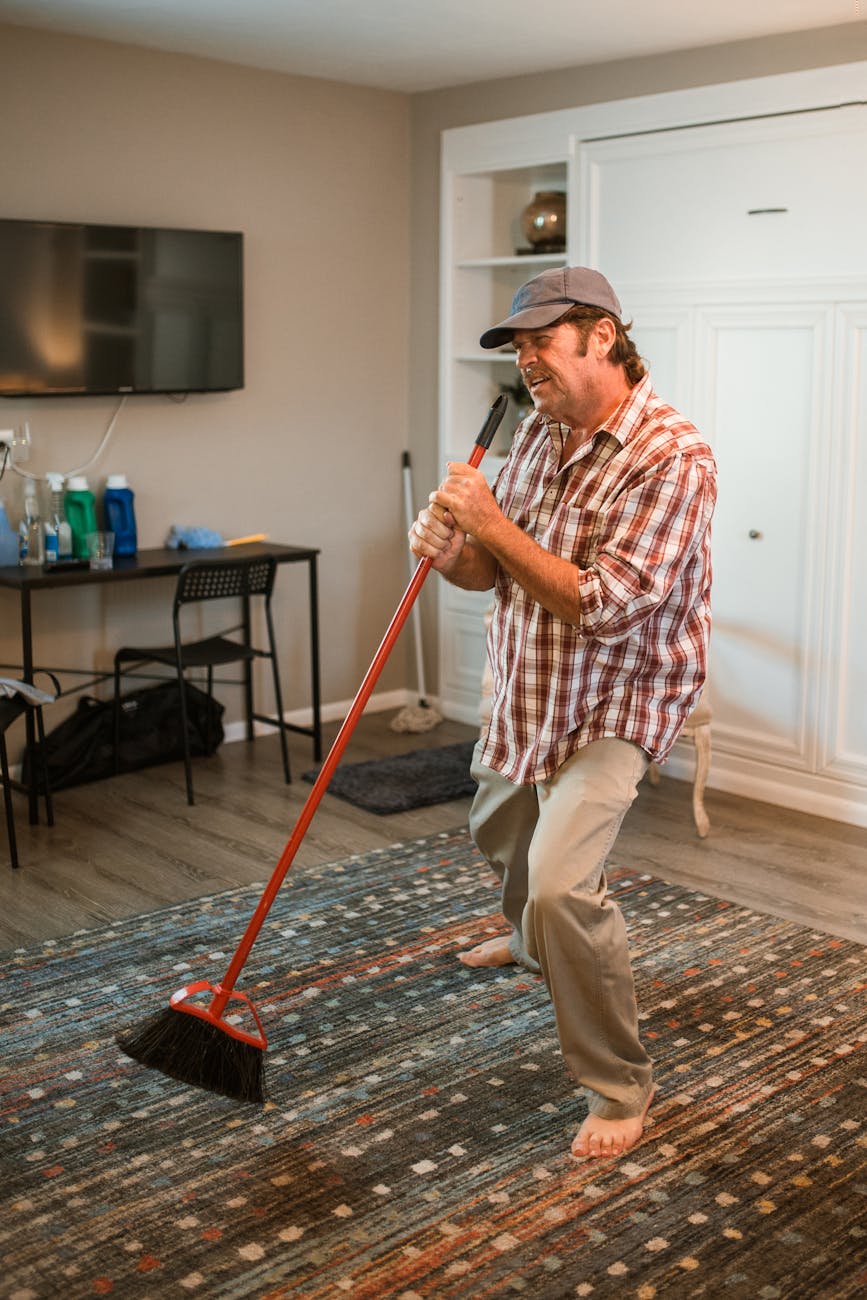
- Sweeping or vacuuming? Add some extra movement by dancing to your favorite music. Alternatively, you can add in some lunges.
These little tweaks add up. Over time, you’ll feel stronger, move more, and maybe even be inspired to tackle bigger fitness goals or healthier eating. Most importantly, you’ll prove to yourself how much you’re capable of—just by making one small shift.
Sometimes, a small habit change is all it takes to start believing it.
At the end of the day though, we’re all just trying our best with what we’re given, so do what feels right for you and your body. This is purely meant for inspiration.
I believe in you!
Let’s Hear from You!
Do you think of rocking your baby to sleep as a workout? Are you going to try changing up how you complete your chores? What are some other chore + workout ideas you do on a regular basis?
I’d truly love to hear from you in the comments below! Or come say hi over on Facebook, Instagram, or Pinterest. Thank you for tuning into this week’s Notes from the Week!
Until next time! May your life’s melody lead you toward peace and love.
Want more real-life parenting tips, along with other free monthly activities and coloring page printables? Subscribe to the newsletter (it’s free!) – and join our community of parents, educators, therapists, and caregivers!
About the Author

Julie Perley is the author of The Melody of Life and is a board-certified music therapist, wife, and mom to three wonderful children. Her goal is to provide informative, fun, and supportive resources for any parent, educator, or caregiver of children. Read more about the author here.

 The Melody of Life
Leave a comment