In recent years, there have been numerous videos appearing on the internet depicting the seemingly miraculous effects that music has on a person. From a former ballerina with Alzheimer’s listening to the music of Swan Lake and reenacting the dance from her wheelchair1, to a little girl who was born without eyes and uses music therapy to help keep her calm while getting hospital procedures done2, music therapy has started garnering the attention it so rightfully deserves from the general population.
Outside of those viral videos however, many still find themselves wondering – what exactly is music therapy?
Music Therapy Definition
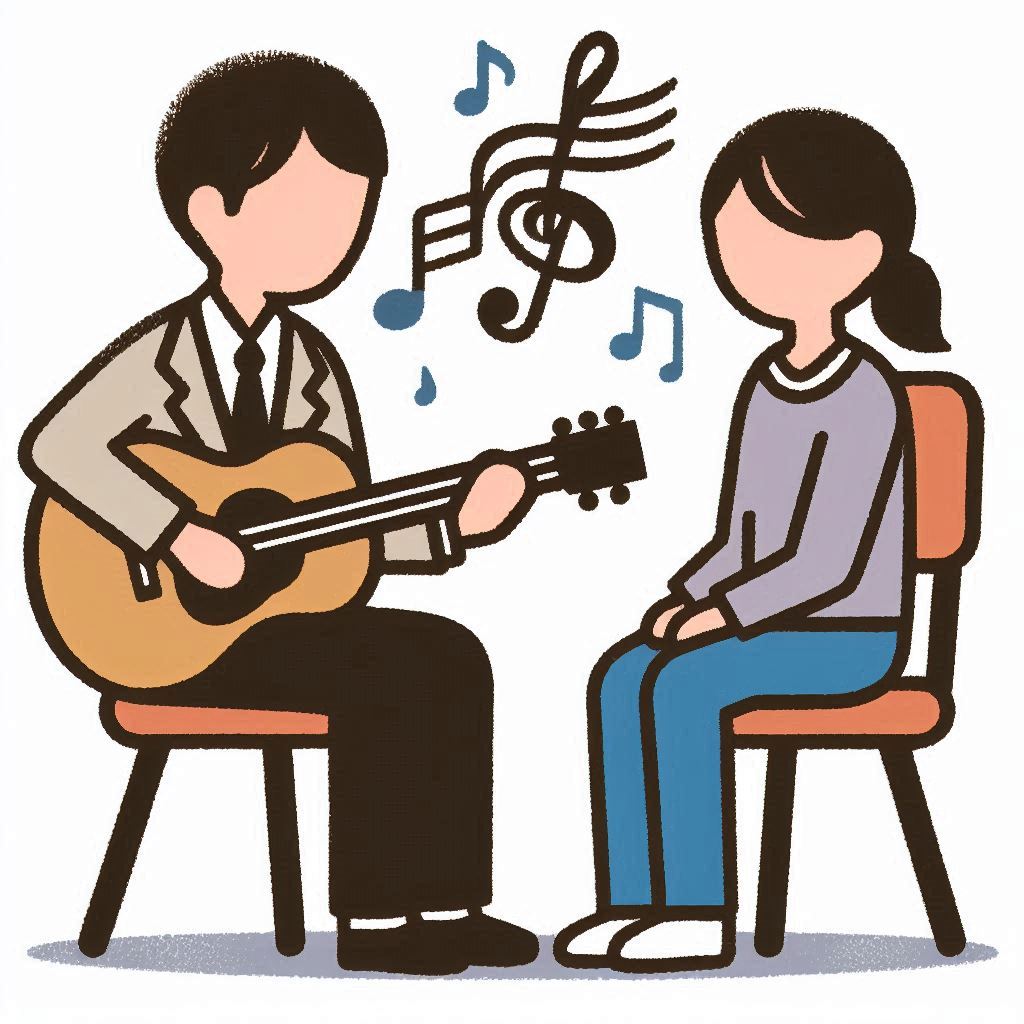
“Music Therapy is the clinical & evidence-based use of music interventions to accomplish individualized goals within a therapeutic relationship by a credentialed professional who has completed an approved music therapy program. Music therapy interventions can address a variety of healthcare & educational goals:
~Promote Wellness
~Manage Stress
~Alleviate Pain
~Express Feelings
~Enhance Memory
~Improve Communication
~Promote Physical Rehabilitation”3
And so much more.

One of the biggest myths (much to the chagrin of music therapists everywhere) is that any situation where music is played for others to promote relaxation or to help someone feel better can be called music therapy. This is FALSE.
It is only through the skills of a trained and board-certified music therapist leading the experience where a session can be called music therapy.
“Why?” you may be wondering. “I use music to calm down, or to pump myself up before exercising. Isn’t that the same thing?” While it’s true that music can have a therapeutic effect on nearly every living human on the planet, it cannot be called therapy unless there is a therapist present to work on goals alongside their clients.
Just as you wouldn’t call your regular gym workout “physical therapy,” or one of your conversations “speech therapy,” the same goes for music therapy. The therapist is the key to unlock the potential music has for realizing an individual’s goal.
Qualifications for Music Therapists
Music therapists undergo vigorous learning and real world training before they are able to become board-certified. An undergraduate or masters degree at an accredited university is essential. Furthermore, the process of enrollment includes an audition on a primary instrument, making it a career that requires prior high-level musicianship skills before entrance in an undergrad program.
Once enrolled, the music therapy student learns expanding musicianship skills, effective therapy strategies, and gains practical experience in how to lead a session. Creating goals after meeting a client, writing a treatment plan, documentation, and showcasing progress are also learned and practiced.
Finally, after graduating from the undergraduate program, the music therapy student enters into an internship that’s specific to the field and clientele that is of highest interest. For myself, that was in mental health, but music therapists work in a wide array of other settings, including hospitals, schools, hospice, private practice, and so many more. Music therapy interns must complete a minimum of 1200 hours of clinical training with at least 15% (180 hours) in pre-internship experiences and at least 75% (900 hours) in internship experiences.
Once the internship is complete, they are qualified for taking the board certification exam through CBMT (Certification Board for Music Therapists). The exam is an intense, high bar setting test that is utilized to demonstrate all of the knowledge the music therapist should have gained throughout their schooling and internship. It is a bit notorious for being challenging, with the first-time pass rate hovering around 69%.
By the end of all that training, board-certified music therapists are well qualified to lead sessions, identify areas of needed growth for client goals, and to implement an effective session plan for each person they work with.
All of that to say, music therapy is so much more than just “listening to your favorite music.”
Have more questions about music therapy or are looking to become a music therapist? Check out my other article detailing how to become a music therapist as well as the reason I chose this profession.
Summary and Considerations:
How You Can Use Music Therapy Strategies in Your Life
Music therapy is a healthcare practice that uses music to improve a person’s health and well-being. It involves the use of musical elements such as melody, rhythm, harmony, and lyrics to address physical, emotional, cognitive, and social needs through a board-certified music therapist. Music therapists undergo vigorous training in order to practice in the field and learn effective therapeutic skills to impart on their clients.
This blog will be used to generalize the concepts and skills I learned as a music therapist for use in parenting, personal relationships, self-care, mental health, and more. You, too, can learn how to use music as an effective tool for everything from bonding with your baby and calming an overstimulated toddler, to finding new ways for understanding your partner on a deeper level.
I’ll be posting regularly so check back in frequently for updates, or feel free to subscribe to the blog to get notifications on when I post new articles.

 The Melody of Life
Leave a comment